
Google ads for contractors: setup, cost and mistakes
Google ads for contractors puts your jobs in front of customers actively searching for roofers, plumbers, electricians right now. But 70% of contractors lose money on it because they don't know the three biggest mistakes.
Updated August 2026 · By JR Grow
Google ads for contractors: how it actually works
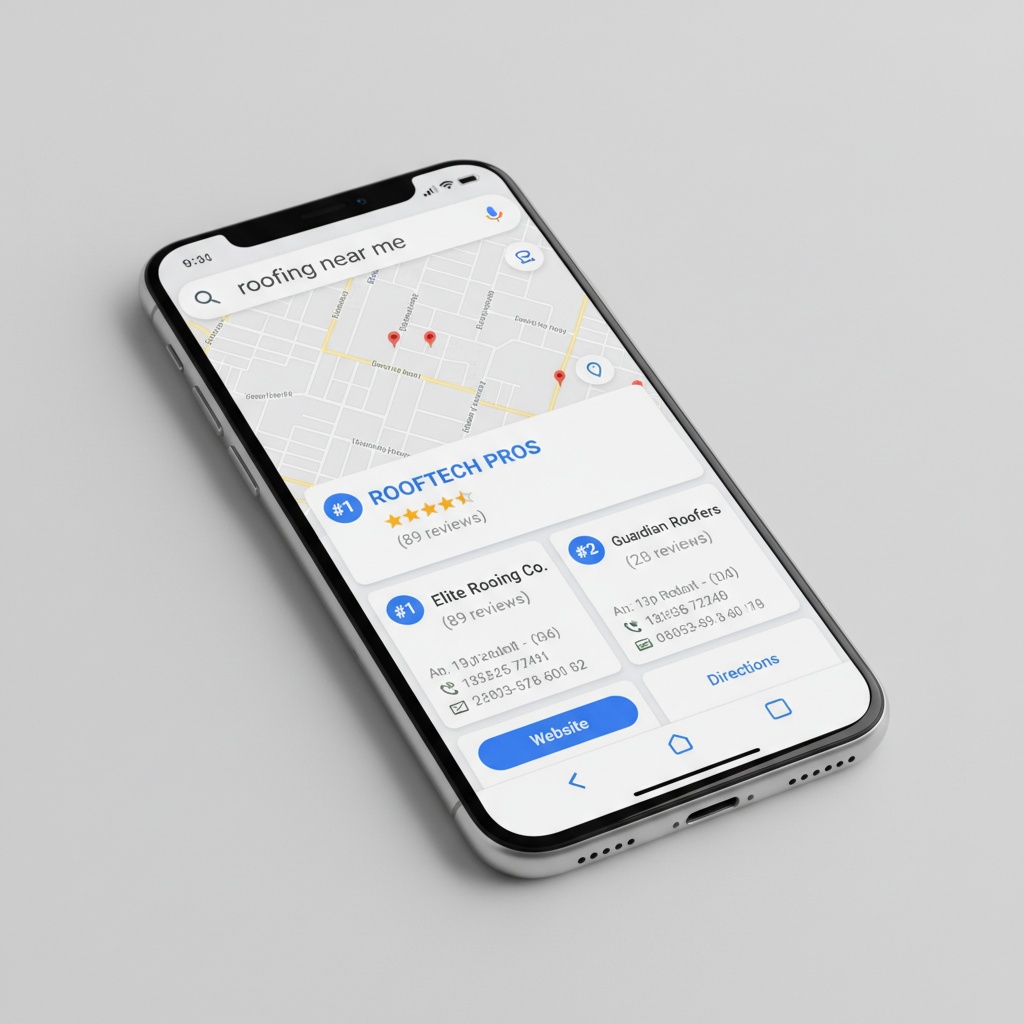
Google ads for contractors is PPC (pay-per-click). You bid on keywords like 'emergency plumber near me' or 'roof repair this week'. When someone searches that, your ad shows at the top of Google. They click it. You pay. That click goes to your website or straight to a phone number. Simple.
The difference between Google ads for contractors and organic search results: organic is free but takes 3-6 months to rank. Ads start today. You control the budget. You stop, your ads stop. No contract. That's why contractors like it when they're in a hurry or new to a market.
But here's the trap: most contractors set it up, get charged $3-15 per click, see 50 clicks, spend $300, get 2 phone calls, 1 becomes a job, they made $500 profit on a $1,500 roofing job, call it break-even, then quit. They never gave it 90 days. They never optimized landing pages. They never tracked which keywords actually close jobs. So Google ads for contractors gets a bad reputation. It's not the system. It's the setup.
Real costs: what you'll actually spend on search ads
Cost depends on three things: your market, your trade, and competition. A roofer in Austin pays more per click than a roofer in Fargo. An electrician in a dense city pays more than a painter in the suburbs.
Typical cost per click ranges by trade:
- HVAC: $8-20 per click
- Plumbing: $6-18 per click
- Roofing: $12-25 per click
- Electrical: $10-22 per click
- Painting: $4-12 per click
- Landscaping: $3-8 per click
A small contractor starting out typically budgets $30-50 a day ($900-1,500 per month) for the first 90 days. Most contractors don't make money on Google ads in the first 30 days. You're buying data and phone numbers. After 90 days, if you've optimized based on which clicks actually close, ROI can hit 12x or better in dense markets. But you have to be patient and measure what works.
Pro move: start with one city, one service, one keyword that's already converting (like 'emergency plumber' instead of 'plumbing'). Don't spread $1,500 across 10 keywords in 5 cities. Concentrate fire.
The three biggest mistakes contractors make with Google ads
Mistake one: no tracking. You run Google ads for contractors but you don't know which clicks became jobs. Someone clicks your ad, calls, you have no idea which keyword they searched or what they paid for that click. You can't double down on what works. This kills 40% of contractor ad campaigns.
Mistake two: bad landing pages. Most contractors send ad clicks to their homepage. Your homepage lists 10 services, has a photo of your truck from 2015, and takes 8 seconds to load on a phone. Google ranks pages on mobile speed and relevance. If your landing page isn't built for that specific keyword (emergency roof leak, not 'roofing services'), your cost per click goes up and your conversion rate drops. Use JR Grow if you want a mobile-first page built for conversions, or hire a developer to make a tight, specific landing page for each keyword.
Mistake three: quit too early. You run ads for 2 weeks, spend $300, get 0 jobs. Your cousin said Facebook ads are better. You stop. You never gave it enough volume or time to optimize. Most contractors see the break-even point between week 4 and week 12, depending on the trade and ticket size. If your average job is $1,500 and your cost per lead is $25, you need 60 clicks minimum to have a real shot at 3-5 jobs. That costs $1,500. Worth it if even one job sticks.
Google ads vs. organic SEO: which one now, which one later
Ads work now. SEO works later. If you've never had a website or you're new to a market, Google ads close jobs in 7-14 days while your Google Business Profile and local rankings are building. Think of ads as your offense, SEO as your defense. You want both, but don't start with both.
Run Google ads for contractors while you're building your organic presence (local SEO, Google Business Profile, on-page optimization). After 90 days of consistent SEO work, your rankings will start showing up in the local 3-pack. At that point, you can reduce your ad spend because organic is handling some of the volume. But most contractors who stop all ads too early lose momentum because their organic rankings aren't strong enough to pick up the slack yet.
A 90-day playbook: start with $50/day on Google ads in your main market while you optimize your Google Business Profile and build reviews (an automated review engine gets you 47 reviews a year on average). After 90 days, reassess. If you're ranking in the top 3 locally for key terms, you can cut ad spend by 30-50%. If you're still invisible, keep the ads running but increase organic SEO effort.
How to set up Google ads the right way (without losing money)
Step one: create a Google Ads account and link it to your Google Business Profile. Google will show your name, phone, address, and reviews in the ad. Trust matters for contractors. Ads without a profile or reviews get ignored.
Step two: define one main keyword and one geography. Don't scatter your budget. Start with 'emergency plumber near [your city]' or 'roof repair [neighborhood]'. PPC for contractors works best when you're specific and local. Search ads that say 'we serve all of [state]' waste money on people 45 minutes away.
Step three: build or fix your landing page. One clear headline that matches the ad, a phone number above the fold, a form option, page speed under 2 seconds (average is 6-8 seconds). Mobile first. Test it on your phone before you launch ads.
Step four: turn on conversion tracking. Install the Google tag so clicks are linked to phone calls or form submissions. You need this data to optimize. Without it, you're flying blind.
Step five: start small. $30-50 a day for one keyword. Monitor for 2 weeks. Check: are people clicking? Are they staying on the page for more than 3 seconds? Are any calling? If clicks are cheap but no one's calling, your landing page is the problem. If people are calling but not converting to jobs, your phone game needs work.
When Google ads for contractors is NOT worth it
Ads don't make sense if your typical job is under $500. A $250 painting touch-up job isn't worth the $25-40 cost per click. The math doesn't work. Stick to door-hangers and local SEO if your ticket size is small.
Don't run ads if your schedule is already full 3 months out. You'll waste money. Fix your capacity first, then buy more leads.
Don't run ads if you can't track phone calls. If your business isn't set up to know which call came from which keyword, you'll never optimize and you'll hemorrhage money in the dark.
Don't run ads if you're not willing to give it 90 days and $3,000-5,000 minimum investment. If your budget is $300 a month and you want to quit after 4 weeks, you're testing, not running a campaign. Testing won't show you anything.
Finally, if you hate managing metrics, A/B testing, and adjusting bids, ads will frustrate you. You need to touch this weekly. If you want to set it and forget it, hire an agency or use a done-for-you system like JR Grow where someone else builds your website, manages your reviews, and optimizes your Google Business Profile so you can focus on jobs, not dashboards.
Google ads for contractors: common questions answered
Can I use Google ads and local SEO at the same time? Yes. Start with both. Google ads gives you leads now while SEO builds your organic ranking for the next 90 days. After 3-4 months, your organic presence will pick up some volume and you can scale back ads if you want.
How many clicks before I see a job? Depends on your trade and close rate. Most contractors close 1 job per 3-5 phone calls if they answer the phone and quote quickly. If each click costs $15 and you close 1 job per 3 clicks, you're paying $45 per job lead. Fair price if your job is $2,000+.
Should I run ads on Google or Facebook? Start with Google if your job is over $1,000 and people search for it (plumber, roofer, electrician). Start with Facebook if you want to reach people who don't know they need you yet (landscape design, pool services). Most contractors need Google first.
What's the best budget to start? $30-50 per day for one city, one service, one keyword. That's $900-1,500 per month. Enough to get real data without wasting money if something's wrong with the setup.
How long before Google ads turns profitable? 60-90 days if you're optimizing. Some contractors see profit by day 45 in hot markets with tight keywords. Others take 4 months if they're starting from zero. Track everything.
The real ROI: what happens after 90 days
Contractors who stick with Google ads for contractors and actually optimize typically see a 12-20x ROI within 90 days in dense markets. That means $1,500 spent on ads turns into $18,000-$30,000 in job revenue. Not all of it profit, but serious top-line growth.
The catch: most contractors don't see 12-20x. They see 3-5x ROI because their landing pages are slow, their keywords are wrong, they quit at day 30, or their phone team doesn't follow up fast enough. 67% of callers won't leave a voicemail. They call the next guy. So if you're not answering in 2 rings or you don't have a missed-call text-back system sending an SMS in 30 seconds, you're losing 80% of your paid clicks to competitors.
Real contractors who run Google ads right use a missed-call system. When someone calls and you're on another job, they get an instant text with your name and callback time. That text has a link. They can book a time slot. You call them back. No more lost jobs. JR Grow includes this with the ad system setup because ads without call recovery are half-effective.
After 90 days, re-evaluate. Pull your best keywords and scale them. Kill your worst ones. Cut your ad spend by 25% if your organic rankings are helping. Keep what's working. This is a process, not a one-time setup.
Why most contractors quit Google ads, and how to not be that guy
Contractors quit because they expect the system to work without help. They think Google ads is set it and forget it. It's not. It needs attention: bid adjustments, keyword pruning, landing page tweaks, call tracking analysis. If you're not willing to spend 3-5 hours a week looking at your numbers, you'll waste money and quit.
The second reason they quit: they don't understand the funnel. A lead is not a job. A click is not a lead. A call is not a lead. A quote is not a job. If you lose money on 4 jobs to profit on 1, and you don't realize that's how the math works, you'll panic and kill the campaign thinking it's broken.
The third reason: they run ads but their website is bad, their phone skills are weak, or they don't have a system to track which jobs came from ads. So they can't prove the ads worked even if they did. Frustration kills it.
How to not quit: (1) commit to 90 days minimum. (2) Hire someone or use a tool to track phone calls to keywords. (3) Set up a missed-call text-back system so you don't lose calls when you're busy. (4) Build one tight landing page for your main keyword, not 10 pages. (5) Review numbers every Friday. If your cost per job is under your job profit, keep going. If it's over, fix the landing page or keyword, don't quit. (6) Use a system like JR Grow if you want the ads handled for you while you focus on the trade. Done-for-you takes the guesswork out. No more wondering if you're doing it right.
Key terms
PPC (pay-per-click): You pay Google every time someone clicks your ad. No click, no charge. Most contractors use Google Ads (formerly AdWords) to run PPC campaigns.
Cost per click (CPC): The average amount you pay for one click on your ad. A roofer in Austin might pay $18 per click while a painter in a small town pays $5.
Conversion: A click that becomes a phone call, form submission, or booked appointment. Not all clicks convert. That's why landing page quality matters.
Landing page: The webpage someone lands on after clicking your ad. It should match the ad promise, load fast on mobile, and have a clear call to action (phone number or form).
Missed-call text-back: An automated SMS sent to a customer within 30 seconds if they call and you don't answer. Recovers up to 80% of lost jobs by keeping the lead warm until you can call back.
Straight from Google, worth reading in full: Tips to improve your local ranking on Google and Guidelines for representing your business on Google.
Want your phone ringing again?
JR Grow builds your website, ranks you on Google, recovers missed calls, and fills your Google profile with 5-star reviews. Done for you. One flat price. Cancel anytime. Live in 7-10 days.
Book a Free Strategy Call →Frequently asked questions
How much does Google ads for contractors cost per month?
Depends on your market and trade. Most contractors budget $900-1,500 per month to start. Cost per click ranges from $3 for painters to $25 for roofers in competitive cities. Start small, track results, scale what works.
Can I use PPC for contractors if I'm new to online marketing?
Yes, but it's riskier. You need to track phone calls, build good landing pages, and optimize based on data. If you've never done this, hire an agency or use a done-for-you system. DIY works if you're willing to learn and lose some money in month one.
What's the difference between Google ads and local SEO for contractors?
Google ads show up immediately (24 hours) but cost per click. Local SEO takes 3-6 months to rank but then it's mostly free. Use ads to get jobs now while building your organic presence. After 90 days, organic will help carry the load.
How many jobs can I get from Google ads in the first month?
Depends on budget, trade, and close rate. With $1,500 spend and typical $12-20 cost per click, you'll get 75-125 clicks. Most contractors close 1 job per 3-5 calls. So expect 15-40 job leads, maybe 3-8 jobs. Track everything to prove it.
Is Google ads better than Facebook ads for contractors?
Google ads work better if people are actively searching for your service (plumber, electrician, roofer). Facebook works better for brand awareness and reaching people who don't know they need you yet. Start with Google if your job is over $1,000.