Google Ads vs Facebook Ads for contractors: which wins jobs
Google Ads vs Facebook Ads for contractors breaks down like this: Google captures customers actively searching for your service right now. Facebook finds people who might need you someday. For most trades, Google wins.
Updated August 2026 · By JR Grow
Google Ads vs Facebook Ads for contractors: the short answer
Google Ads vs Facebook Ads for contractors is not a tie. Google Ads beat Facebook Ads for most roofing, plumbing, electrical, HVAC, and landscaping work because they target intent. When someone types "roofer near me" or "emergency plumber," they are ready to hire today. When someone sees a Facebook ad while scrolling, they might bookmark it for later, then forget it.
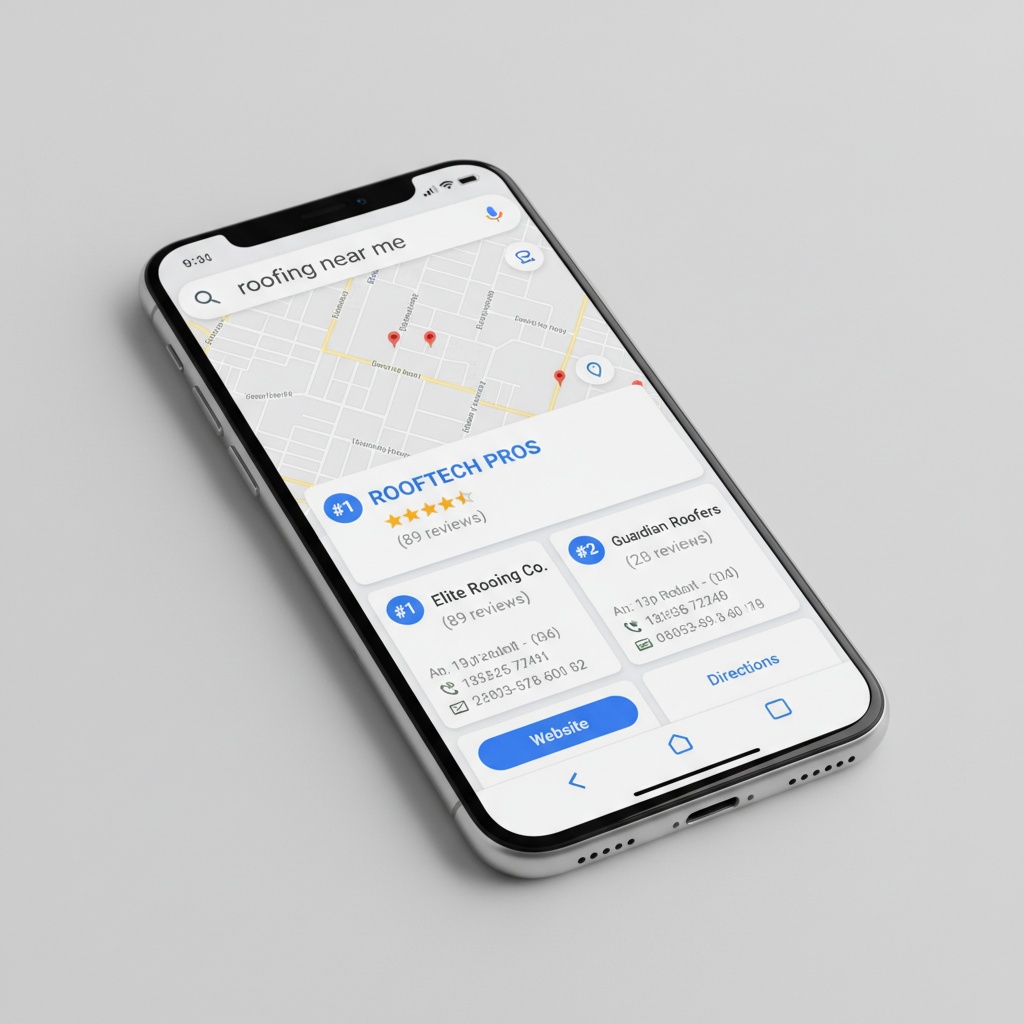
Google Ads capture 46% of all searches, and 46% of those are local. A homeowner searching "roof repair cost" on mobile will see Google results first, and 88% of local mobile searches end in the top 3 results. That means outside the top 3, you are invisible. PPC via Google search puts you in that top 3 instantly. Facebook Ads put you in their feed, competing against cat videos and family photos.
The trade-off is cost. Google Ads typically cost more per click in competitive markets, but the person clicking has already decided they need you. Facebook Ads cost less per click but convert at a lower rate because the audience is cold.
Search ads vs social ads: how intent changes everything
Search ads (Google) and social ads (Facebook) work on opposite principles. Search ads interrupt someone who is already looking. Social ads interrupt someone who is not. That difference alone explains why search typically wins for home services.
When you run a Google search ad, the homeowner has typed a keyword. They have a problem. They are asking Google to solve it. You appear as a solution. When you run a Facebook ad, the homeowner is watching their newsfeed. They did not ask for you. You have to grab their attention and convince them they need you before they scroll past.
For contractors, search is faster to ROI. A plumber in Austin running Google Ads for "emergency plumbing" will book jobs within days. A plumber running Facebook Ads for "plumbing services" will build brand awareness slowly, then convert weeks later, if at all.
PPC vs social: cost per lead and cost per job
PPC (pay-per-click) on Google and social ads on Facebook both charge per click, but the math is different. In competitive trades like roofing and HVAC, Google Ads cost 1.50 to 5.00 per click depending on your market and keyword. Facebook Ads cost 0.50 to 2.00 per click in the same market.
But cheap clicks do not mean cheap jobs. A Google Ads click from someone searching "roofer" converts at 5% to 15%. A Facebook Ads click converts at 0.5% to 2%. That means Google Ads deliver 5 to 10 jobs per 100 clicks at 3.00 per click, or 30 to 90 cost per job acquired. Facebook Ads deliver 0.5 to 2 jobs per 100 clicks at 1.00 per click, or 50 to 200 cost per job acquired.
Google Ads winners: electricians, plumbers, roofers in cities with high search volume. Facebook Ads winners: service areas where you want slow-burn brand building, or seasonal trades where you target people 3 to 6 months before they need you.
Google Ads dominates for emergency and immediate jobs
If your job type is emergency or same-day (roof leak, pipe burst, furnace down, power outage), Google Ads dominates. Facebook Ads cannot compete because the buying cycle is immediate. A homeowner calling for emergency plumbing right now is not scrolling Facebook. They are typing "24/7 plumber near me" into Google.
Google Ads win when the customer need is urgent. Facebook Ads win when the customer need is planned. A homeowner planning a kitchen renovation 3 months from now might see a contractor Facebook Ad and save it. That same homeowner will not search for a contractor for 3 months.
For trades with year-round emergency calls (plumbing, electrical, HVAC emergency service), Google Ads should be the priority. For trades that are seasonal or planned (roofing, landscaping, general contracting), Facebook Ads can supplement Google Ads to build a future pipeline.
Google Ads vs Facebook Ads for contractors: mobile-first reality
88% of local mobile searches end in the top 3 results. Mobile is where the game is won. Google Ads appear at the top of mobile search results. Facebook Ads appear in the mobile newsfeed. One is a destination the user opened with intent. One is an interruption.
Mobile users searching for contractors are usually on-site or in their car. They need a roofer now. They need a plumber now. They click the first result that answers their search. Google Ads sit there. Facebook Ads have to compete with every other ad and organic post in their feed.
If you have a slow website or poor mobile experience, neither platform will help. But Google Ads will at least get the click. Your site must load under 2 seconds to convert that click to a job. Most contractor sites load in 6 to 8 seconds and lose the job before the homeowner even sees your phone number.
When to use both: Google Ads and Facebook Ads together
The best contractors do not choose. They stack Google Ads on top of Facebook Ads. Google Ads capture the hot leads (people searching right now). Facebook Ads capture the warm and cold leads (people who will search in 2 to 6 months).
Start with Google Ads if you have a limited budget. It has a faster ROI. Add Facebook Ads once you have Google Ads running profitably and you want to expand your funnel. Use Facebook Ads to retarget website visitors who did not call or book. Use Google Ads to capture new customers you have never seen before.
Timing matters too. Before spring, a landscaper should run Facebook Ads to stay top-of-mind. During spring, run Google Ads to capture the searches. In winter, dial back both and focus on reputation and reviews.
When Google Ads vs Facebook Ads is not the real problem
Running Google Ads or Facebook Ads will not fix a broken website, a phone number that goes unanswered, or no Google Business Profile. If 67% of callers will not leave a voicemail and they hit your full inbox, they call the next guy. Platform choice does not matter if you cannot capture the job once the person finds you.
If your website takes 8 seconds to load, no platform will convert visitors to jobs fast enough. If you do not have a local SEO foundation, you will waste money on ads trying to do the job that Google Business Profile and local ranking should do for free.
Fix the basics first: mobile-fast website, live answering or missed-call text-back (recovery up to 80% of lost jobs), and a Google Business Profile optimized for local searches. Then layer ads on top. Ads are an accelerant, not a foundation.
The real metric: jobs booked, not clicks or impressions
Most contractors who fail at ads count clicks and impressions instead of jobs. Google Ads might deliver 200 clicks at 2.00 each (400 spent). If only 5 convert to calls and 2 convert to booked jobs, your cost per booked job is 200. That is too high. Facebook Ads might deliver 800 clicks at 0.50 each (400 spent). If only 4 convert to calls and 1 converts to a booked job, your cost per booked job is 400.
The real game is jobs per dollar spent. Google Ads typically deliver more jobs per dollar for emergency services and urgent repair work. Facebook Ads can deliver more jobs per dollar if you are selling planned services (renovations, new builds) or if you have a strong brand and reputation already built.
Track every click back to a job. Use call tracking numbers, SMS, and booking confirmations. Do not run ads if you cannot measure results. Do not pick a platform based on what you think works. Pick it based on what works in your market, for your trade, tracked to the actual jobs you book.
Key terms
PPC (pay-per-click): An advertising model where you pay every time someone clicks your ad. Google Ads, Bing Ads, and Facebook Ads all use PPC, but Google Ads and Facebook Ads target different audiences and intent.
Local search: A search query that includes geographic intent, like 'plumber near me' or 'roofer Austin.' 46% of all Google searches are local, and 88% of local mobile searches end in the top 3 results.
Cost per acquisition (CPA): The total amount you spend on ads divided by the number of jobs (or customers) you actually book. If you spend 400 on Google Ads and book 4 jobs, your CPA is 100 per job.
Conversion rate: The percentage of ad clicks that turn into a desired action, like a phone call or booking. Google Ads typically convert at 5% to 15%, while Facebook Ads convert at 0.5% to 2% for most home-service contractors.
Straight from Google, worth reading in full: Tips to improve your local ranking on Google and Guidelines for representing your business on Google.
Want your phone ringing again?
JR Grow builds your website, ranks you on Google, recovers missed calls, and fills your Google profile with 5-star reviews. Done for you. One flat price. Cancel anytime. Live in 7-10 days.
Book a Free Strategy Call →Frequently asked questions
Should I use Google Ads or Facebook Ads as a contractor?
Start with Google Ads if your jobs are urgent or on-demand (roofing, plumbing, electrical). Start with Facebook Ads if your jobs are planned or seasonal. Most contractors run both, but Google Ads deliver faster ROI for emergency work because people search for you when they need you.
Are Google Ads expensive for contractors?
Google Ads cost 1.50 to 5.00 per click in competitive trades, but convert at 5% to 15%. That is 30 to 90 per booked job. Facebook Ads cost 0.50 to 2.00 per click but convert at 0.5% to 2%, which is 50 to 200 per booked job. Google is usually cheaper per job.
Can I run Facebook Ads instead of Google Ads and save money?
You can, but you will miss the customer who is searching for you right now. Facebook Ads cost less per click but take longer to convert and reach cold audiences. For emergency services, Facebook Ads alone will cost more per job than Google Ads.
Do I need a Google Business Profile before running Google Ads?
No, you can run Google Ads without a profile. But your competition probably has one, and 46% of all searches are local. A Google Business Profile optimized for local SEO will generate free leads alongside your paid ads, which is why many contractors see 3.5x more calls after 90 days of profile optimization.
How do I know which platform is working for my business?
Use call tracking numbers and booking confirmation for each platform. Track every click, call, and job back to the ad that started it. Calculate cost per booked job for Google Ads and Facebook Ads separately. The platform with the lowest cost per job wins. Do not measure success by clicks or impressions.