What are local citations
What are local citations? They're online mentions of your business name, phone, and address (NAP) on directories, review sites, and local listings that tell Google you're a real, credible business in your service area.
Updated August 2026 · By JR Grow
What are local citations, exactly
A local citation is any online mention of your business name, phone number, and address (called NAP data) on a website you don't own. Google uses these citations to verify you're a legitimate local business and to determine your service area. The more citations you have, the stronger the signal to Google that you exist and serve customers in your market.
Unlike backlinks or website content, citations are just your basic business facts listed on places like Yelp, The Spruce, Angie's List, Home Advisor, Google Business Profile, industry directories, and hundreds of other local sites. Consistency matters. If your phone number or address changes between citations, Google gets confused and your ranking drops.
Why local citations matter for contractors
Google ranks local businesses on three things: Proximity, Relevance, and Prominence. Citations are the backbone of Prominence. Without them, you're invisible beyond your immediate neighborhood, even if your website is solid.
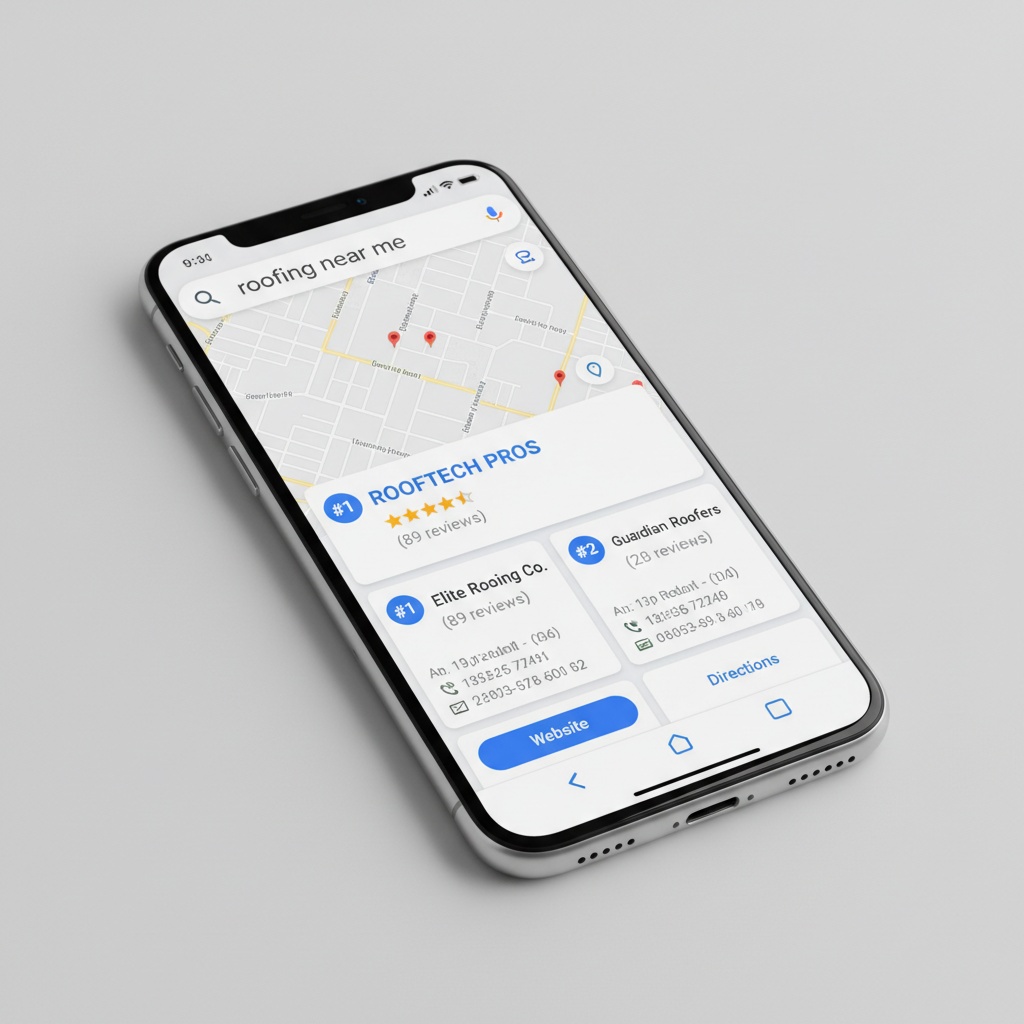
Here's the real number: 88% of local mobile searches end in the top 3 results. Below that, you don't exist to most callers. Citations push you up into that top 3 by telling Google you're active, established, and trusted in your area. A roofer with 20 consistent citations outranks a roofer with zero citations, all else being equal.
For contractors, this means: more phone calls. More jobs. No missed opportunities because you weren't on the map.
Local citations definition and how they work
Think of local citations as digital breadcrumbs. Every time your business name, phone, and address appear together online (on Yelp, Google, Home Depot, BBB, industry-specific directories), Google crawls that page and adds another confirmation: 'This contractor is real and active here.'
The system works like this: (1) you're listed on multiple platforms with consistent NAP, (2) Google sees those consistent mentions, (3) Google trusts your Local Business Profile more, (4) you rank higher on the local 3-pack when someone searches 'plumber near me' or 'roofer in [your city]', (5) you get more calls.
Google calls this process 'local relevance.' It's not magic, it's pattern recognition. Consistency is the engine.
Simple example: How a contractor uses citations to get ranked
Let's say you're a HVAC contractor in Nashville, TN. Your name is 'Miller HVAC.' Here's what happens:
- You list Miller HVAC, (615) 555-0123, 1200 Main St, Nashville, TN 37201 on Google Business Profile
- A customer leaves you a 5-star review on Yelp that mentions your name and phone
- You're on Angie's List, Home Advisor, Thumbtack, and the Nashville Better Business Bureau with the same NAP
- When someone in Nashville types 'HVAC repair near me,' Google sees 6+ consistent citations for Miller HVAC and ranks you in the top 3
- You get 8-12 calls that week instead of 1-2
That's the lever. Citations amplify your visibility and credibility in one geo-grid at a time.
When local citations alone aren't enough
Citations are necessary but not sufficient. A contractor with perfect NAP consistency on 50 directories but a slow website and no Google Business Profile photos will lose to a competitor with half the citations but a fast mobile site and optimized reviews.
You also need: a website that loads under 2 seconds (the typical average is 6-8 seconds and you'll lose half your calls), an active Google Business Profile with current photos and service area posts, and a system to collect and display reviews (46% of all Google searches are local, and Google ranks businesses with higher review volume higher). Citations are one engine. To own the local 3-pack, you need all four.
How to use this definition in contractor marketing
When someone tells you they'll 'get you citations,' ask: on which platforms, how many, and will they be consistent across all of them? A marketing person who submits your NAP to 200 random directories but gets your address wrong on half of them actually hurts you. It's worse than doing nothing.
The right move: start with the major citation platforms that matter in your trade (Google Business Profile, Yelp, Angie's List, Home Advisor, The Spruce, BBB). Make sure NAP is identical on every one. Then add niche directories specific to your trade. That's 8-15 quality citations, not 200 messy ones.
If you're not doing this in-house and you're tired of paying agencies that don't deliver, JR Grow handles local citations as part of a done-for-you Google Business Profile optimization system. You get consistent NAP across the platforms that matter, live in 7-10 days, on one dashboard, no contract.
Key terms
NAP: Name, Address, Phone number. The three core pieces of data that make up a local citation. Google uses NAP consistency to verify your business and rank it locally.
Local citation: An online mention of your business name, phone, and address on a website you don't own, used by Google to verify your credibility and local relevance.
Local 3-pack: The top 3 local business results that appear when someone searches for a service near them on Google. 88% of local mobile searches end in these top 3 results.
Google Business Profile: Google's free tool for local businesses to manage how they appear in Google Search and Google Maps. It's the most important citation platform for contractors.
Straight from Google, worth reading in full: Tips to improve your local ranking on Google and Local Business structured data.
Want your phone ringing again?
JR Grow builds your website, ranks you on Google, recovers missed calls, and fills your Google profile with 5-star reviews. Done for you. One flat price. Cancel anytime. Live in 7-10 days.
Book a Free Strategy Call →Frequently asked questions
What's the difference between a local citation and a backlink
A local citation is just your business name, phone, and address (NAP) listed on another website, usually a directory. A backlink is a hyperlink from another site to your website. Citations tell Google you exist. Backlinks tell Google your website is credible. Both matter for local ranking, but citations are faster to build and more specific to local search.
Do I need citations on every directory
No. Focus on the major ones first: Google Business Profile, Yelp, Angie's List, Home Advisor, BBB, and any industry-specific directories for your trade. Consistency matters more than volume. 15 citations with perfect NAP data will rank you higher than 100 citations with mismatched phone numbers or addresses.
What happens if my phone number or address changes
Update every citation as soon as you change. If your phone number changes but you don't update it in 5 of your 10 citations, Google sees conflicting data and your ranking drops. Old citations with bad data will hurt you for months until they expire or you correct them.
Can local citations improve my Google ranking overnight
No. Google typically takes 30-60 days to crawl new citations and factor them into your Local Business Profile ranking. Expect gradual improvement: a typical contractor sees about 3.5x more calls after 90 days of consistent Google Business Profile optimization, which includes citations plus photos, posts, and reviews.
Are local citations free or do I have to pay
Many top directories (Google, Yelp, Angie's List basics) are free to claim and list on. Some charge for premium features or verified badges. Home Advisor and Thumbtack work on a lead-generation model where you pay per call. The core citations should be free, but premium placement or lead services cost money.