What is speed to lead: Definition & Why It Matters for Contractors
What is speed to lead? It's how fast you respond to a customer's first contact, usually a phone call or text. The faster you respond, the higher your chance of booking the job.
Updated August 2026 · By JR Grow
What is speed to lead: The core definition
Speed to lead is the time between when a customer first tries to contact you and when you actually respond. For most contractors, that first contact is a phone call or text message. A response within minutes, not hours, dramatically increases the odds that customer books with you instead of calling your competitor.
67% of callers won't leave a voicemail. They hang up and dial the next roofer, plumber, or electrician on Google. If you don't answer or respond within the first few minutes, that job is gone. Speed to lead is the difference between winning and losing those calls.
Why speed to lead matters for contractors
Customers with an urgent roof leak, backed-up drain, or tripped breaker panel aren't patient. They need someone now. Whoever picks up the phone first, or texts back fastest, wins the job. It's not about being the cheapest or the fanciest. It's about being available when they need you.
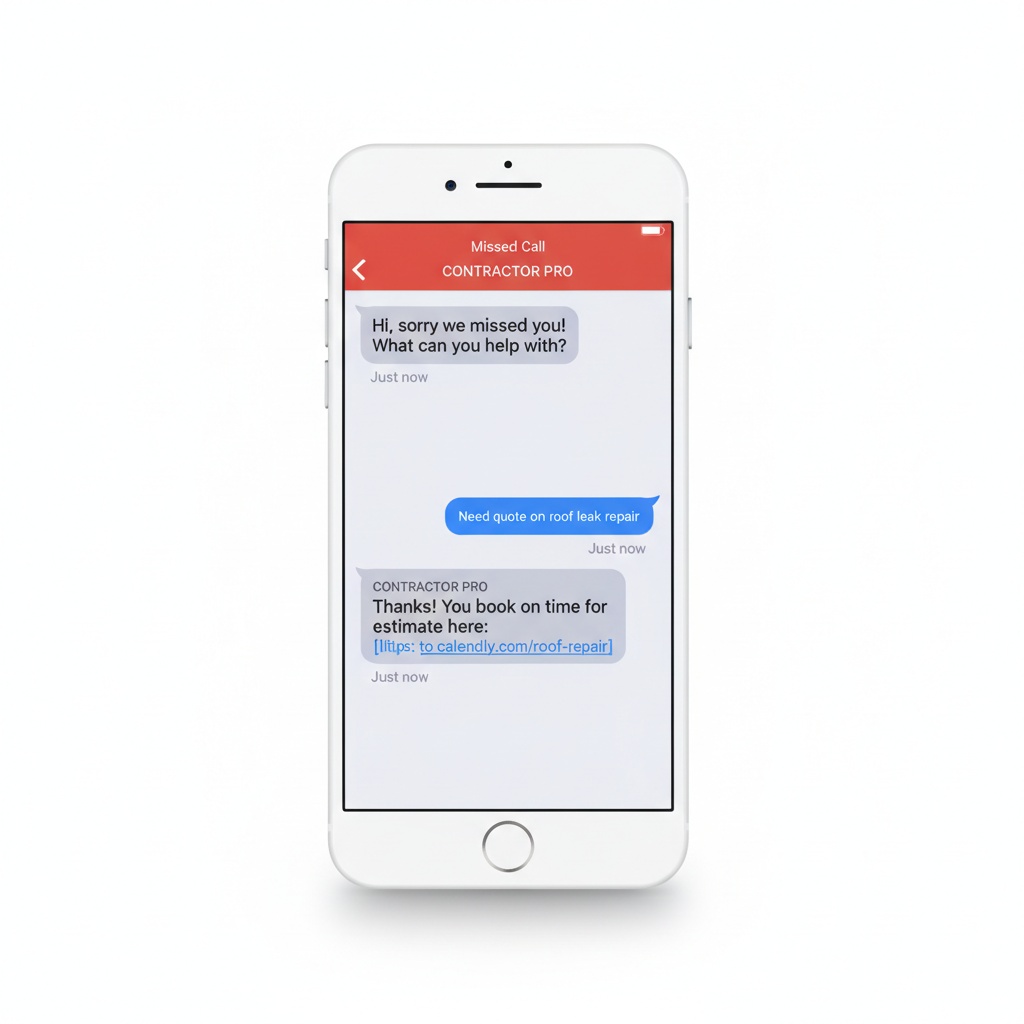
That's where missed-call text-back becomes critical. If you're on a job and can't answer, an automated SMS response within 30 seconds tells the customer you got their call and someone will contact them soon. Studies show this recovers up to 80% of jobs that would have been lost to the next guy. Without speed to lead, you're handing work to competitors every single day.
Real example: How speed to lead wins a job
It's Tuesday at 2:47 p.m. A homeowner searches 'emergency plumber near me' on Google, finds your number, and calls. You're elbow-deep in a sewer line. Competitor A doesn't answer either, but doesn't text back. Competitor B sends an automated text within 30 seconds: 'Thanks for calling [Your Name] Plumbing. We got your call and someone will reach you in under 2 hours.' At 3:15 p.m., you call back. The homeowner picks up. Job booked. Competitor A and B never heard from that customer again.
That's speed to lead in action. It's not magic, it's just being faster and more organized than the other guy.
Speed to lead and Google rankings
Google doesn't measure speed to lead directly, but customers do. When you consistently answer calls fast and book jobs, your Google Business Profile fills with 5-star reviews from happy customers who felt heard. Those reviews signal to Google that you're a legitimate, responsive business. Combined with Proximity, Relevance, and Prominence, a strong review count helps you own the local 3-pack in your area. 88% of local mobile searches end in the top 3 results. Outside the top 3, you're invisible.
Speed to lead is the business habit that fuels your reputation online.
When speed to lead alone isn't enough
Answering fast doesn't matter if no one calls in the first place. If you're not ranking for local searches, not on Google Business Profile, or your website is slow and outdated, speed to lead is theoretical. You need customers finding you first. A fast mobile-first website that ranks locally, combined with a system that captures missed calls via text, creates a machine. Then speed to lead becomes your unfair advantage.
JR Grow installs all four engines: local SEO, Google Business Profile optimization, a mobile-first site, and automated missed-call text-back. The whole point is to put more calls in front of you, and make sure you never miss a single one.
How to measure and improve your speed to lead
Start simple. Have a friend or family member call your business number during business hours. How long until you answer or text back? Now do it during lunch or while you're on a job. If it's longer than 5 minutes, you're losing jobs. Set a benchmark. Aim for under 2 minutes. If you can't answer in person, make sure missed-call text-back is on and working. Track how many calls come in each day and how many you actually connect with. That gap is your lost revenue.
The contractors who win more jobs don't rely on memory or luck. They measure. They use tools that work while they work. Speed to lead becomes a system, not a wish.
Key terms
Speed to lead: The time between when a customer first contacts a contractor and when that contractor responds, typically via phone call or text message.
Missed-call text-back: An automated SMS sent within 30 seconds when a customer calls but the contractor doesn't answer, confirming receipt of the call and setting expectations for follow-up.
Local 3-pack: The top three local business results that appear at the top of Google search results for location-based queries like 'plumber near me.'
Straight from Google, worth reading in full: Tips to improve your local ranking on Google and Local Business structured data.
Want your phone ringing again?
JR Grow builds your website, ranks you on Google, recovers missed calls, and fills your Google profile with 5-star reviews. Done for you. One flat price. Cancel anytime. Live in 7-10 days.
Book a Free Strategy Call →Frequently asked questions
What is speed to lead in contractor marketing?
Speed to lead is how quickly you respond to a customer's first contact, usually a phone call or text. Contractors who respond within minutes instead of hours win more jobs, because 67% of callers won't leave a voicemail and will call a competitor instead.
Why do contractors lose jobs because of slow speed to lead?
When you don't answer or respond fast enough, the customer calls the next roofer, plumber, or electrician on Google. That prospect never comes back. Missed-call text-back systems can recover up to 80% of those lost jobs by sending an automatic SMS within 30 seconds.
How fast should I respond to customer calls?
Under 2 minutes is ideal. If you can't answer in person, an automated text response within 30 seconds tells the customer you got their call and someone will call back soon. Most customers will wait if they know you're responsive.
Does speed to lead affect my Google ranking?
Google doesn't rank you directly on speed to lead, but it affects your customer reviews. Customers who feel heard and get fast service leave 5-star reviews, which boost your ranking in the local 3-pack. 88% of local searches end in the top 3 results.
What tools help contractors manage speed to lead?
Missed-call text-back systems, a mobile-first website under 2 seconds to load, and a unified dashboard to track incoming calls and responses. JR Grow includes all of these in one system so nothing falls through the cracks.