
Local citations for contractors: NAP consistency explained
Local citations for contractors are online mentions of your business name, address, and phone number across directories and websites. Google uses them as trust signals to rank you in the local 3-pack. Get NAP consistency right, and you move up.
Updated August 2026 · By JR Grow
What local citations for contractors actually do
A local citation is any online mention of your business name, address, and phone number, NAP for short. It lives on Google Maps, Yelp, local directories, industry sites, even social media. Google crawls these sources. When the data matches perfectly across citations, Google thinks your business is real, legit, and worth ranking higher.
Here's the math: 88% of local mobile searches end in the top 3 results. You're either in the top 3 on a given street corner or you're invisible. Local citations for contractors are one of three ranking signals Google uses, along with proximity and reviews. A contractor with sloppy NAP data across 10 directories won't rank as well as one with clean, consistent data across 30.
The missing piece most contractors miss: ranking is different on every street corner. It's a geo-grid, not one number. Your NAP consistency has to be perfect in each citation so Google knows you're the same business in that neighborhood.
NAP consistency: why it matters more than you think
NAP stands for Name, Address, Phone. If your business is listed as 'Smith Roofing Inc.' on Google, 'Smith Roofing' on Yelp, '123 Main St' on one site and '123 Main Street' on another, and '(555) 123-4567' with a space vs. without, Google sees three different businesses. It's that literal.
Google's algorithm runs a consistency check. The closer your NAP data matches across all sources, the higher your prominence score climbs. Contractors who fix this simple detail often see about 3.5x more calls after 90 days of optimization. That's not magic. That's Google rewarding you for being verifiable.
Common mistakes: using a PO box in some citations and a physical address in others, listing a mobile number on your website but a different one on Yelp, misspelling your own business name because you registered it one way and talk about it another way. Pick one NAP. Stick to it everywhere. Write it down. Use copy-paste.
How to build local citations the right way
Step 1: Write down your exact NAP. Business name as registered, street address (not PO box), phone number with area code. This is your source of truth.
Step 2: Claim or create your Google Business Profile first. This is the authority cite. Everything else follows this version.
Step 3: List yourself on high-authority business directories relevant to your trade. For roofers, electricians, plumbers, HVAC, painters, landscapers: The Better Business Bureau, Angi (formerly Angie's List), HomeAdvisor, Yelp, Apple Maps, and industry-specific directories for your trade. Each one is a local citation.
Step 4: Use the exact same NAP in every citation. Copy from your Google Business Profile. Paste. Don't edit. Don't abbreviate.
Step 5: Submit to local citation directories and niche directories. A plumber should be in plumbing directories. A roofer should be in roofing directories. These carry weight because they're specific to your trade.
Step 6: Audit quarterly. Search your NAP. Screenshot mismatches. Fix them. NAP consistency is not a one-time task, it's ongoing.
Local citations for contractors: which directories actually matter
Not all citations are equal. High-authority directories carry more weight than spam sites. Contractors should prioritize this order:
- Google Business Profile (mandatory, non-negotiable)
- Apple Maps, Bing Places (the other two mapping platforms)
- Better Business Bureau
- Industry-specific directories (e.g., Contractor.com, Trustmark for contractors, NRCA for roofers, PHCC for plumbers)
- Yelp
- HomeAdvisor, Angi
- Local chamber of commerce websites
- Local news sites, community directories
A single citation on a high-authority site beats 10 citations on low-authority directories. Quality over quantity. That said, 30-50 high-quality citations is a solid target for a local contractor trying to own their service area.
Citation building and review engines: a short-term vs. long-term play
Citation building takes time and attention. Some contractors do it in-house. Most don't, because it's boring and easy to mess up. That's where a system helps. An automated approach gets your NAP into key directories fast, then keeps it clean. An automated 5-star Google review engine runs in the background, pulling reviews from satisfied customers and pushing them to Google. Reviews and citations together lift your prominence score. 46% of all Google searches are local. Reviews and citations are how you win that traffic.
Real example: a contractor with clean local citations for contractors and about 47 new reviews a year (the result of an automated review system) will outrank a contractor with sloppy citations and no reviews. It's not close. The system wins every time.
JR Grow handles this as part of the done-for-you system. You don't build citations yourself. The system does it, keeps your NAP consistent, and automates review generation on one dashboard. You get the four engines running: fast website, missed-call text-back, local SEO with Google Business Profile optimization, and automated reviews. No contract. One flat monthly price. Cancel anytime. Live in 7-10 days.
How to audit and fix bad local citations
Step 1: Search your business name + your city name + your service (e.g., 'Smith Roofing Denver roofer'). Look at the first page of Google results. Take screenshots of every cite you find.
Step 2: List them in a spreadsheet: directory name, URL, your listed name, address, phone number. Copy the data exactly as it appears.
Step 3: Compare each citation to your source of truth (your Google Business Profile NAP). Flag mismatches: wrong address format, phone number with or without parentheses, business name abbreviated differently, state spelled out vs. abbreviated.
Step 4: Prioritize fixes on high-authority sites first. Better Business Bureau, Google Maps, Yelp, HomeAdvisor. Contact the directory, claim the listing, edit the data. Some sites require verification via email or phone.
Step 5: Delete duplicate or spam citations. If you're listed as 'Smith Roofing Inc.' and 'Smith Roofing, Inc.' and 'Smith Roofing INC' on three different directories, consolidate to one version everywhere.
Step 6: Monitor ongoing. Set a reminder for 90 days. Run the audit again. Local citations for contractors need regular maintenance. It's not a one-time project.
When local citation building is not worth your time
Citation building only matters if you're trying to rank in your local service area. If you're a contractor operating in one small town and you don't care about online visibility, citations won't help you. If you're already swamped with jobs and turning away customers, adding more local citations won't change your life. If your business model is referral-only and you've never lost a job because someone couldn't find you online, citation work is waste.
Also, if you're unwilling to maintain NAP consistency, don't bother building citations. A messy Google Business Profile with bad reviews will tank you faster than poor citations. Fix the fundamentals first. Then add citations.
Finally, if you hire someone to build citations and they disappear after a month, you're starting from zero. Citations require ownership. You have to own your listings, monitor them, and update them if your phone number or address changes. If you can't commit to that, hand it to a system that does it for you automatically.
Local citations, Google Business Profile optimization, and the path to 3-pack ranking
Google ranks local businesses on three things: Proximity (how close you are to the search), Relevance (how well your business matches the search intent), and Prominence (your online reputation and consistency). Local citations for contractors improve Prominence. A strong Google Business Profile improves Relevance and Proximity. Together, they move you toward the local 3-pack.
Here's the sequence: clean up your NAP, claim your Google Business Profile, add high-quality photos and service categories, get reviews consistently, build citations on high-authority directories. Do this for 90 days. Your prominence score climbs. You move from outside the top 3 to inside the top 3 on more search queries. More visibility. More calls. More jobs.
A typical trade contractor who installs this system sees about 3.5x more calls after 90 days. Not because one thing changed. Because four things changed at once. Fast mobile website that turns callers into booked jobs. Missed-call text-back that recovers 80% of lost jobs from people who don't leave voicemails. Local SEO and Google Business Profile running on a geo-grid. Automated reviews building trust every week. That's the system.
Key terms
NAP: Name, Address, Phone. The three pieces of business data that Google uses to verify and rank local businesses. Consistency of NAP across all directories is critical for local ranking.
Business Directory: An online database where businesses list their information. High-authority directories include Google Business Profile, Yelp, Better Business Bureau, and industry-specific sites. Google crawls directories to verify business data and build local ranking signals.
Citation Building: The process of listing your business NAP on multiple online directories and websites. More citations on high-authority sites improve your local prominence score and help you rank in the local 3-pack.
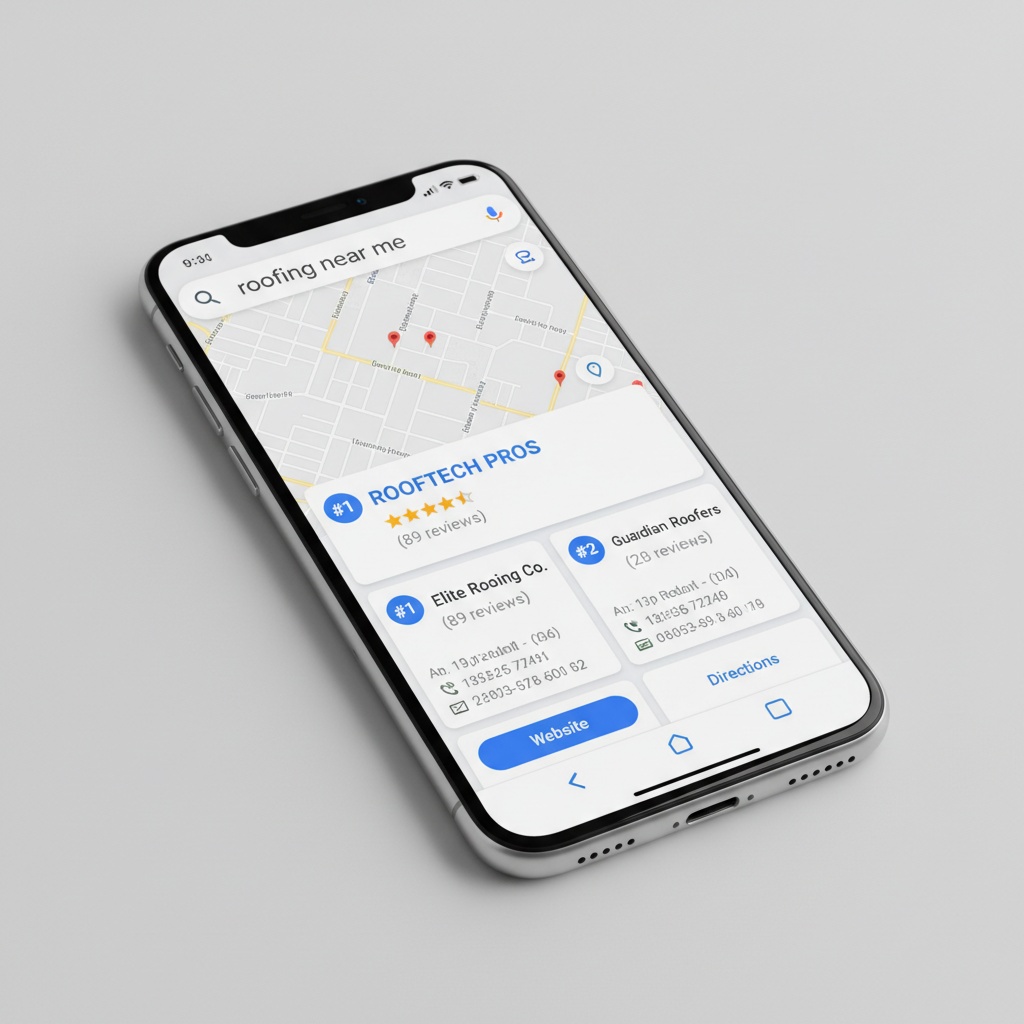
Local 3-Pack: The three local business listings that appear at the top of Google search results when someone searches for a service with location intent (e.g., 'roofer near me'). 88% of local mobile searches end in the top 3 results.
Prominence Score: Google's measure of your business's online reputation and consistency. It's built from citations, reviews, Google Business Profile completeness, and backlinks. Higher prominence means better local ranking.
Straight from Google, worth reading in full: Tips to improve your local ranking on Google and Guidelines for representing your business on Google.
Want your phone ringing again?
JR Grow builds your website, ranks you on Google, recovers missed calls, and fills your Google profile with 5-star reviews. Done for you. One flat price. Cancel anytime. Live in 7-10 days.
Book a Free Strategy Call →Frequently asked questions
How many local citations do I need to rank?
There's no magic number. Most contractors should aim for 30-50 citations on high-authority directories relevant to their trade. Quality beats quantity. One citation on the Better Business Bureau outweighs 10 on spam sites. What matters most is NAP consistency. If you're inconsistent across 100 citations, you rank worse than being consistent across 20.
What's the difference between a citation and a backlink?
A citation is a mention of your business name, address, and phone number. A backlink is a hyperlink to your website from another site. Both signal trust to Google, but they work differently. Citations help with local ranking. Backlinks help with overall domain authority. For contractors, citations are more important because 46% of all Google searches are local.
How often should I audit my local citations?
At minimum, quarterly. Run a search for your business name, city, and service type. Check the first page for citations. Compare NAP data to your Google Business Profile. Fix mismatches on high-authority sites first. If your phone number or address changes, update all citations immediately. Consistency is always the priority.
Can bad citations hurt my Google ranking?
Inconsistent citations can hurt you. If Google sees conflicting information across directories, it can't verify which version is correct. This lowers your prominence score. Duplicate or spam citations might not help, but they usually don't actively hurt unless they contain wrong information. The real damage comes from mismatched NAP data, not from having too many citations.
Do I need to be listed in every directory?
No. Focus on high-authority, trade-relevant directories first. A roofer should prioritize Google, Apple Maps, Better Business Bureau, industry directories, and Yelp before chasing 50 small local sites. A plumber should focus on plumbing-specific directories. Contractors who spread themselves too thin across low-quality directories waste time and risk NAP inconsistency.